Machine data provides visibility into performance, but it doesn’t fully explain how outcomes are achieved. In this blog, learn how human data gives a more complete picture for mission-critical operations.
Every operations leader in a mission-critical facility believes they take data quality seriously. Dashboards are configured. BMS feeds are streaming. SCADA, EPMS, and cloud monitoring systems are integrated. Reports can be generated on demand. From a system standpoint, the environment appears data-rich and well managed. But there’s a blind spot that many facilities have not fully addressed: human data.
The Other Half of Operational Intelligence
In any data center, sensors produce thousands of data points per second. Monitoring systems log continuously. Human-generated data, by comparison, represents a much smaller stream. Yet its influence is outsized.
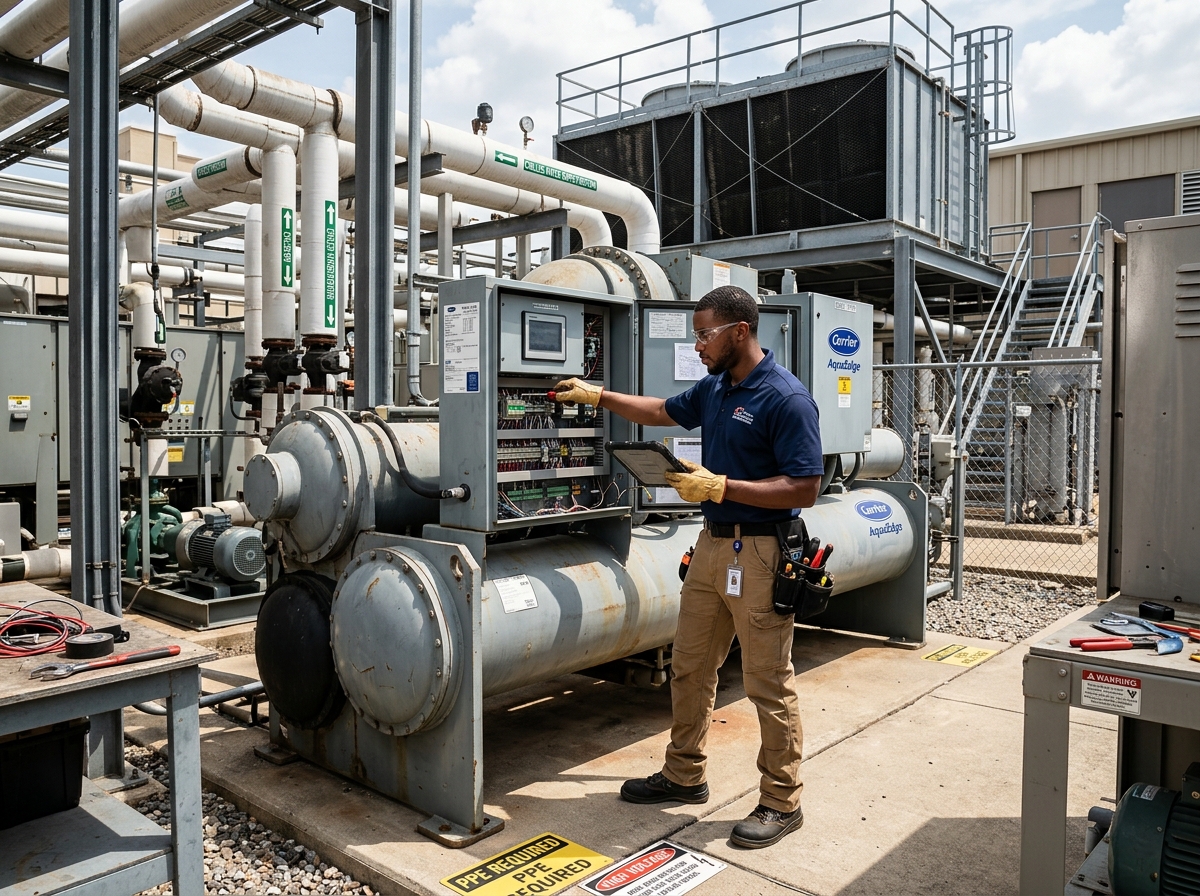
A BMS alert doesn’t repair a failed system. A technician diagnoses the issue. A supervisor approves a corrective action. A team executes a procedure step by step. Every maintenance activity, every incident response, every commissioning handoff includes human decisions and behaviors that shape the result.
Despite this reality, many facilities treat human data as administrative documentation rather than operational intelligence. Payroll hours are tracked. Shift schedules are recorded. Work orders are logged. Incident summaries are archived. Beyond that, the structure often weakens.
If human error remains the leading root cause of incidents across mission-critical environments, then human performance needs to be tracked with the same rigor as mechanical performance.
The Human KPIs Most Facilities Miss
Several categories of human data frequently go under-managed, including:
- Procedural deviation rates are rarely trended systematically.
- Step-by-step sign-off timing may be captured but not analyzed.
- Approval chain latency for critical work windows is often experienced as friction without being measured.
- The ratio of successful versus failed procedure runs is seldom benchmarked over time.
Treat human execution as a first-class dataset with mandatory fields like timestamp, decision state, trigger evidence, action owner, and due-by time. For escalations, add recipients, acknowledgment time, and response deadline. Once these fields are mandatory, trend quality and comparability to improve quickly across shifts and sites.
A practical starter set includes: standing alarms (target <10), steady-state alarm rate (target <6/hour), PM-to-failure ratio (>4:1), and repeat failure within 90 days (<5%). These indicators connect behavior quality to reliability outcomes and can be trended by shift, team, and site.
Maintenance prescription changes may be documented, yet the decision trail behind those changes isn’t always structured or compared across sites.
- When an incident is labeled “human error,” does the analysis stop there, or is the specific type of error categorized and trended?
- When a maintenance evolution takes longer than planned, is that variance examined?
- When rework occurs, is the underlying behavior recorded in a way that supports improvement?
By tracking these operational risk indicators, it reveals how consistently procedures are executed and where exposure is building beneath the surface.
Why Human Data Gets Overlooked
Data quality often becomes deprioritized because operations move quickly. Construction hands over to operations. Teams export documentation, transfer responsibility, and move forward. The focus shifts immediately to uptime, SLAs, and physical execution. Data governance feels abstract compared to restoring service or completing a maintenance window.
Over time, though, incomplete or inconsistent data accumulates. Reconciling it later requires additional labor and institutional knowledge that may no longer exist. The same dynamic applies to human interaction data. It’s easier to monitor equipment performance than to structure and preserve how people interact with that equipment.
There’s also a long-standing industry assumption that equipment reliability can be evaluated independently. Manufacturers validate performance under controlled factory conditions. Specifications are tested and documented. Once deployed, however, equipment operates inside a human system.
Procedures, approvals, maintenance behaviors, and training quality all influence how that equipment performs over time. Mean time between failure can’t be interpreted accurately without understanding how humans interacted with the asset leading up to the event. Maintenance optimization depends on execution patterns, not solely on OEM recommendations.
The Immediate and Long-Term Value
Tracking human data produces tangible benefits.
- In the short-term: structured visibility into procedural execution reduces operational risk. If procedural deviation is a primary driver of incidents, identifying patterns early allows leadership to intervene before minor mistakes escalate into major events. Clear categorization of error types strengthens root cause analysis and sharpens corrective action planning.
- In the long-term: human interaction data informs cost optimization. Organizations can identify which maintenance tasks consistently run without incident, which procedures generate rework, and where labor time is concentrated. These insights support more efficient staffing decisions, more precise preventive maintenance strategies, and better alignment between risk tolerance and cost control.
When human-data capture is weak, degraded performance can persist silently. A documented AI/HPC case showed a change-induced 40% throughput loss running for 72 hours before formal investigation, creating about $806,400 in direct wasted compute. The technical issue mattered, but delayed detection and weak post-change validation amplified the loss. Human-data quality is therefore not administrative overhead; it is a cost-control mechanism.
When human data is structured and trended alongside machine data, maintenance strategies become evidence-based rather than assumption-based, for improved reliability and lower total cost of ownership.
A Simple Test for Ops Leaders
Most facilities can instantly report generator runtime hours, UPS load percentages, and cooling loop temperatures. Those metrics are readily available, but can you just as easily report procedural deviation rates by site? Measure approval latency for critical work windows? Or trend human-error root causes over the past twelve months?
Machine data keeps facilities operating. Human data determines how reliably they operate and at what cost. The difference between uptime and true operational excellence lives in that distinction.