The facilities being built for AI today will likely outlive multiple generations of the technology inside them. MCIM CEO Mike Parks’ Datacloud USA keynote panel explored what that means for how data centers are built, staffed, and operated.
AI is forcing the data center industry to plan further ahead while the technology inside facilities is changing faster than ever, creating an unusual challenge for operators: how to build infrastructure that will remain reliable for decades when future support needs can’t be fully predicted?
That question inspired the Datacloud USA keynote panel, “Flexible, Reliable, Scalable – Building and Operating Future-Proofed AI-Ready Data Centers.” MCIM CEO Mike Parks joined Sachin Jain from CoreWeave, Piotr Tomasik from TensorWave, and Ganesh Aiyer from Keel Infrastructure to discuss how data centers can keep pace with AI demand. Here are three takeaways from the conversation.
1. Make flexibility part of the foundation
A data center may operate for decades, while the technology running inside it can change in a fraction of that time. Mike pointed to the speed of the shift already underway, with rack densities moving from roughly 8-17 kW only a few years ago into the hundreds of kilowatts as new generations of silicon continue to arrive at a rapid pace.
Operators are therefore making long-term infrastructure decisions around technologies whose requirements may look very different several years from now. Throughout the panel, speakers discussed modular designs, adaptable cooling architectures, and infrastructure capable of accommodating multiple generations of technology without repeatedly retrofitting or stranding the underlying asset.
Every change in equipment, density, or workload also changes what operators need to know to run and maintain the infrastructure. Procedures, asset records, maintenance strategies, and operational systems therefore have to evolve alongside it.
That evolution may look different even within the same facility. Data halls and tenant environments can have different IT and OT equipment, SLAs, maintenance windows, and operating requirements. Some equipment entering these environments has never been operated at scale before, leaving teams with little historical performance data to guide them. The operating model needs enough flexibility to account for those differences and capture how each environment behaves over time.
2. Scale knowledge alongside capacity
Behind all of this new infrastructure is a workforce that will somehow have to keep pace with the rate at which it’s being built. Apprenticeship programs and partnerships with local colleges will remain essential, but the rate of infrastructure growth creates a larger structural challenge.
As Mike put it during the panel, “You’re trying to solve an exponential problem with a linear solution.” If portfolios triple or quadruple, the experienced labor pool is unlikely to expand at the same rate. Technicians will need to support increasingly sophisticated infrastructure while encountering equipment and failure modes they may not have seen before.
Giving them access to knowledge the organization has already accumulated can help close that gap. Information from design, construction, and commissioning needs to follow assets into operation, while maintenance history, previous incidents, procedures, and lessons learned across facilities need to be readily available when someone is diagnosing an issue.
Mike explained, “We ask technicians to make decisions under duress without all of the context. And we’ve got to open that context up to them.”
Imagine a newly trained technician who records a higher-than-normal condenser approach temperature during rounds. Nothing is in alarm, so without prior experience with the issue, they move on. An experienced operator might know to check the chiller’s telemetry and history, potentially identifying a deteriorating condition before a trip occurs. (Merin can make that same operational knowledge accessible in the moment, helping technicians recognize when an unfamiliar reading warrants a closer look.)
As portfolios expand, the ability to scale experience becomes almost as important as the ability to scale headcount: what one technician or site has learned needs to become useful to the next.
3. Operational readiness has to start alongside construction
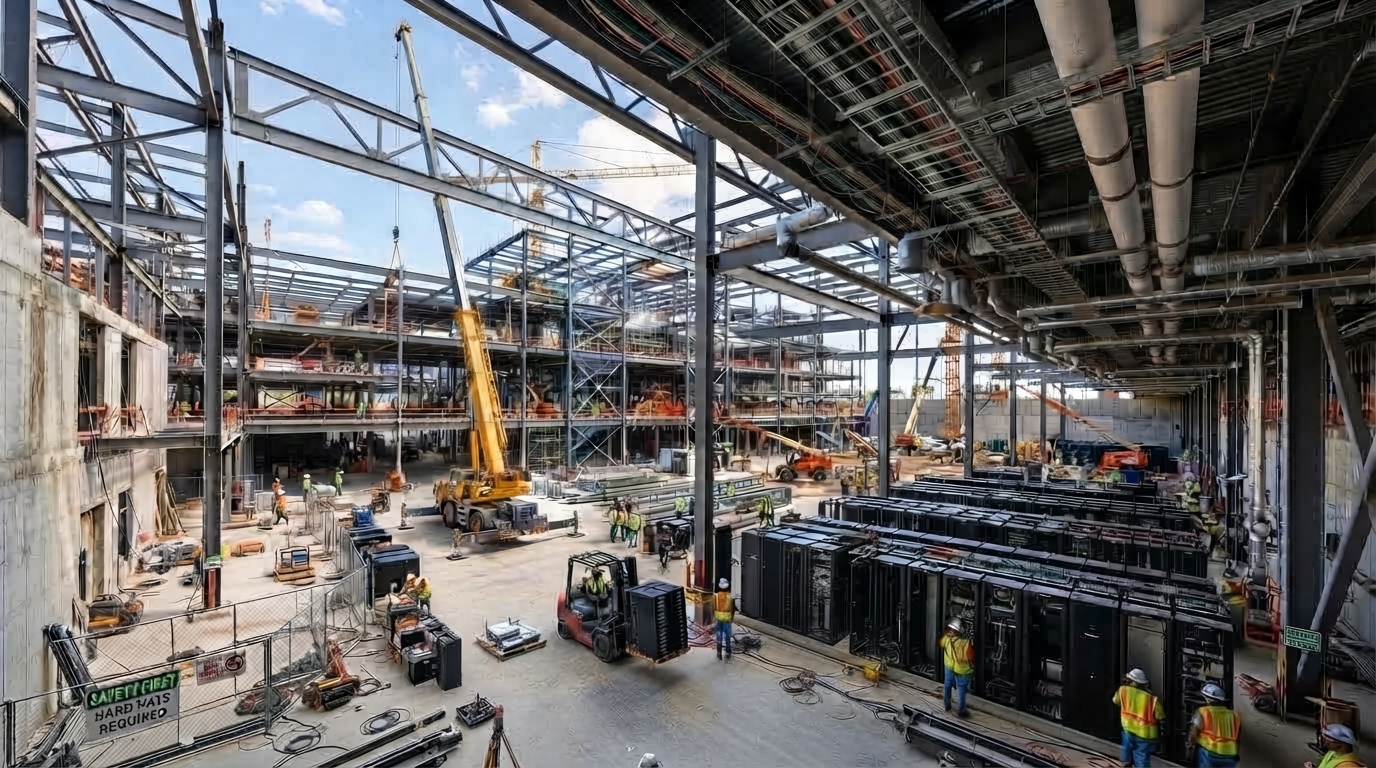
With enormous amounts of capital flowing into AI infrastructure, much of the industry’s attention is focused on how quickly new capacity can be built and energized. That urgency makes it increasingly important to plan for the operating lifecycle while the facility is still being built.
“We’re so focused on the build that the OPEX gets left to day two when ready for service, and it shouldn’t,” Mike said.
That distinction matters because ready-for-service is the beginning of a much longer (and potentially more expensive) chapter in the life of the facility.
Current U.S. benchmarks put conventional data center construction at roughly $10 million to $14 million per MW before costs such as land and active IT equipment. Once energized, that capacity may operate for 20 years or longer, making decisions during design and construction consequential far beyond ready-for-service.
Throughout that lifecycle, operators will make thousands of decisions about maintenance, assets, vendors, energy use, and risk. The information captured from the beginning creates the foundation for those decisions. Hazardous energy management is one example of where that continuity matters; safety information established during construction and commissioning needs to remain connected to the asset once it enters live operations.
The value of that foundation compounds as more execution history is captured. Over time, operators can begin using actual asset and maintenance performance to understand where risk is developing and move toward more condition-based and predictive approaches to maintenance. Reaching that level of maturity depends heavily on the quality and continuity of the operational data being created every day, starting with the transition from construction and commissioning into live operations.
Future-proofing the operating model
The next generation of data centers will encounter multiple generations of technology and changing maintenance and infrastructure requirements. Preparing for that future means thinking about operability with the same long-term lens applied to power, cooling, and physical design.
Flexible infrastructure creates room for technology to change, while connected operational knowledge and clean execution data give the people running that infrastructure the ability to learn and adapt along with it.
Mike captured the opportunity in one question during the panel: As we run our systems, are we creating a data set that will allow us to solve the problems we’re going to have in the future? Because twenty years from now, the most valuable thing these facilities produce may be the operational knowledge accumulated along the way.